A apresentar mensagens correspondentes à consulta civil rights ordenadas por data. Ordenar por relevância Mostrar todas as mensagens

17 janeiro, 2023

Numa sala perto de mim #440

Till (2022) tells the true story of the lynching of the 14-year-old Emmett Till in 1955 and of his mother's journey to get him justice. 90 years after the Civil War blacks in the South still had no rights. Sadly, many still don't. In a society apologetic of such horrible acts, courts can't be trusted and there is little hope of change.

21 setembro, 2020

Palavras lidas #474

From The Writer's Almanac today:

On this day in 1897, the world’s most famous, most reprinted newspaper editorial was published. Commonly known as the “Yes, Virginia, there is a Santa Claus” column, the 416-word article replied to a letter from an eight-year-old New York City girl whose father deferred her question — “Is there a Santa Claus?” — by suggesting she ask the New York Sun. She did so, and on September 20 an editor at the paper handed it to reporter Francis Pharcellus Church with the request that he respond in the following day’s paper.

Church was a veteran newspaperman, having served as a war correspondent for The New York Times during the Civil War, and he was the son of the founder of the New York Chronicle. He dashed off his answer to little Virginia O’Hanlon anonymously, saying, “He exists as certainly as love and generosity and devotion exist and you know that they abound and give your life its highest beauty and joy. Alas! How dreary would be the world if there were no Santa Claus. It would be as dreary as if there were no VIRGINIAS.”

Virginia grew up at 115 W. 95th Street and she grew up to be a New York City schoolteacher, principal, and activist for children’s rights. As for Francis Church, the author of the editorial that has been translated into 20 languages in hundreds of other papers, books, movies, even postage stamps, because traditions holds that editorials are the “official” voice of the newspaper as a whole and not one singular opinion, he never received any recognition, let alone royalties, for his inspirational editorial. It was only after his death seven years later that Church was credited with its authorship.

30 janeiro, 2020

Foi neste dia #353 (1972)

Domingo sangrento em Derry, Irlanda do Norte, há 48 anos. Aniversário negro apenas um dia depois da aprovação do Brexit no parlamento Europeu.
From The Writer's Almanac:


It was on this day in 1972 that British army parachutists shot 27 unarmed civil rights demonstrators in Derry, Northern Ireland — an event known as “Bloody Sunday.” The protestors had been marching to oppose the new British policy of imprisoning people without a hearing.

The Northern Irish conflict stemmed from a peace treaty signed in 1923 after Ireland’s successful war for independence from Britain. The treaty partitioned Ireland, designating the largely Catholic south as an independent nation, while leaving six counties of Northern Ireland, which had a Protestant majority, as part of the United Kingdom.

On this day, parachute troopers were given the okay to fire on the protestors. The first person killed was shot in the back. Thirteen people died — half of them were teenagers. All of the protesters were unarmed.

20 janeiro, 2019

Numa sala perto de mim #395

The Hate You Give (2018) puts the 1989 movie Do the Right Thing in the context of the current Back Lives Matter movement. The problematic neighbourhoods are the same., where poverty and crime lead people to engage in illegal activities. Additionally, the differential attitude of the police towards blacks makes matters worse. The permanent denial of civil rights and liberties to a segregated population is simply appalling. Traumatic events witnessed by children from very young ages mark them forever. The latent conflict passes from one generation to the next in a process with no end. Breaking the cycle is hardly ever an option.

01 dezembro, 2015

Foi neste dia #273 (1955)

60 years ago Rosa Parks, a 42 year old seamstress from Montgomery Alabama, refused to give up her seat on the bus to a white man. Her act of civil disobedience took her to jail for violation of the city's racial segregation laws, but it triggered the great Civil Rights Movement that would gain strength in the 1960s.
Há 60 anos Rosa Parks, uma modista negra de 42 anos de Montgomery Alabama, recusou ceder o seu lugar no autocarro a um homem branco. O seu acto de desobediência civil levou-a à prisão por violação das regras de segregação racial da cidade, mas desencadeou o grande Movimento dos Direitos Civis que viria a ganhar força nos anos 60.

18 setembro, 2015

Espantos #445

In a recent building (inaugurated in 2001), the Nashville Public Library has a room that holds the Civil Rights collection and highlights the not so distant history of the city in the Civil Rights Movement:

starting with the beginnings of school desegregation in 1957, following Brown v. Board of Education, the historic Supreme Court ruling of 1954 that stated that "separate educational facilities are inherently unequal" and therefore unconstitutional;
to the first organized sit ins at a local department store's lunch counter in February of 1960;
rather shocking to see how much violent resistance was offered to peaceful protests, in the sit ins case, or the mere implementation of the law regarding school desegregation
(in some pictures it is very clear who was out to create trouble);
quite impressive to realize how organized the peaceful protesters were, to the point that they had written rules of conduct on the dos and don'ts for all of those participating in sit ins. Those who would not abide by such rules could not participate. Do not strike back nor curse if abused is, to me, the utmost symbol of willingness to fight for a cause you know is right;
finally, Martin Luther King Jr.'s speech at Fisk University in April of 1960 where he stated "I came to Nashville not to bring inspiration but to gain inspiration from the great movement that has taken place in this community."

07 março, 2015

Foi neste dia #254 (1965)

On March 7th 1965, in Selma AL, 600 people initiated a peaceful Civil Rights march to protest the systematic denial of voting rights for blacks in Alabama and also the death of Jimmy Lee Jackson a week earlier, beaten and fatally shot in a similar Civil Rights march in Marion AL. Fifty years ago today, the march was violently broken up after crossing the Edmund Pettus' bridge, in (yet another) Bloody Sunday. 

The event made it to national tv headlines shocking people throughout the country. Many, including religious people, travelled to Selma to join the 2,500 march led by Martin Luther King two days later in what became known as Turnaround Tuesday: after marchers crossed the bridge, troopers stepped aside to let the march progress while marchers knelt in prayer and turned around back to Selma so not to disobey the court order that prohibited the march. On that same night, three white ministers were brutally attacked by local KKK members. Reverend James Reeb 38, from Boston died in the hospital on March 11. Ironically it was his death, not Jimmie Lee Jackson's, that triggered demonstrations and vigils in various cities and gave the final push for the Voting Rights Act, outlined by President Johnson on TV on March 15 and signed into law on August 6, 1965.

The historical events of Selma are remembered in the remarkable movie of the same name, so deserving of the Academy's nomination for best movie.
A 7 de Março de 1965, em Selma AL, 600 pessoas iniciaram uma marcha pacífica protestando a negação sistemática do direito de voto a negros no estado do Alabama e também a morte de Jimmy Lee Jackson uma semana antes, espancado e abatido a tiro pela polícia numa semelhante marcha pelos Direitos Civis em Marion AL. A marcha de há cinquenta anos foi violentamente dispersada depois de atravessar a ponte Edmund Pettus num (outro) Domingo Sangrento. 

Este evento chegou aos noticiários nacionais chocando todo o país. Muitos, incluindo religiosos, viajaram até Selma dois dias depois para se juntarem à marcha de 2,500 pessoas liderada por Martin Luther King naquela que ficou conhecida como Turnaround Tuesday (terça-feira do volta atrás): depois de os manifestantes atravessarem a ponte a polícia afastou-se para os deixar passar, mas estes ajoelharam em oração e depois voltaram para trás regressando a Selma para não desobedecer à ordem judicial que proibia a marcha. Nessa mesma noite, três pastores brancos foram brutalmente atacados por membros locais do KKK. O reverendo James Reeb de Boston, de 38 anos, faleceu no hospital a 11 de Março. Ironicamente foi esta morte, não a de Jimmie Lee Jackson, que motivou manifestações e vigílias por todo o país e deu o impulso final à Lei do Direito de Voto, apresentada na televisão pelo Presidente Johnson a 15 de Março e efectiva desde 6 de Agosto de 1965.

Os acontecimentos históricos de Selma são recordados no filme com o mesmo nome, tão merecedor da nomeação para o óscar de melhor filme.

31 janeiro, 2015

Foi neste dia #253 (1961)

Fifty-four years ago, ten students from Friendship Jr. College were arrested in the sequence of a sit-in at a segregated diner in Rock Hill, North Carolina. Nine of the students refused to pay a $100 fine and were instead sentenced to 30 days of hard labor in a prison farm. This new "jail, no bail" strategy became standard in subsequent Civil Rights movements throughout the South. Three days ago, the convictions were overturned and scratched from the records as a North Carolina judge recognized the nine had been wrongfully convicted of trespassing. The prosecutor of the case formally apologized to the eight men still living and present in court on Wednesday. The judge stated: we cannot rewrite history, but we can right history.
Há cinquenta e quatro anos, dez alunos do Friendship Jr. College foram presos por terem tentado comer num snack-bar para brancos em Rock Hill, na Carolina do Norte. Nove dos alunos recusaram pagar uma multa de $100, optando por uma condenação a 30 dias de prisão com trabalhos forçados no campo. Esta estratégia de "prisão em vez de multa" tornou-se standard nos vários movimentos de Direitos Civis que se seguiram por todo o Sul dos Estados Unidos. Há três dias, as referidas sentenças foram anuladas e os cadastros limpos quando um juíz da Carolina do Norte declarou que os nove tinham sido erradamente condenados por entrar em propriedade privada sem autorização. O procurador pediu desculpa a oito dos homens ainda vivos, que estavam presentes no tribunal na quarta feira. O juíz disse: não podemos re-escrever a história, mas podemos corrigi-la.

28 agosto, 2013

Foi neste dia #213 (1963)

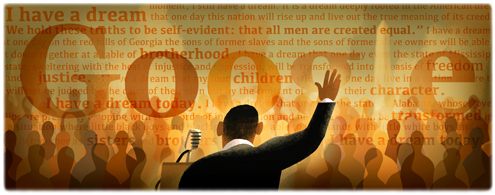
Fifty years ago, 200,000 people participated in a peaceful civil rights rally in Washington, D.C., where Dr. Martin Luther King Jr. delivered his "I Have a Dream" speech in front of the Lincoln Memorial.
______________

Há cinquenta anos, 200,000 pessoas manifestaram-se pacificamente pelos direitos civis em Washington DC. Nesse dia Martin Luther King Jr. falou à multidão em frente ao Lincoln Memorial sobre o seu famoso sonho.

14 janeiro, 2009

Numa sala perto de mim #71


Freedom Song, portrays the civil rights movement in 1961 Mississippi, in the deep South. And thinking so many people today are still imprisoned in those times...

This little light of mine
I'm gonna let it shine