20 março, 2020

Ditto #435

A hermit is simply a person to whom civilization has failed to adjust itself.

--Will Cuppy

19 março, 2020

18 março, 2020

Coisas que não mudam #543

😂😂😂😂
Nothing wrong with optimism within reason though...

17 março, 2020

Parece que estou a ouvir #309

Pedro Barroso 1950-2020
(Outro grande *GRANDE* Belenense)
Menina dos olhos d'agua
Pedro Barroso

Menina em teu peito sinto o Tejo
E vontades marinheiras de aproar

Menina em teus lábios sinto fontes
De água doce que corre sem parar


Menina em teus olhos vejo espelhos
E em teus cabelos nuvens de encantar
E em teu corpo inteiro sinto feno
Rijo e tenro que nem sei explicar

Se houver alguém que não goste
Não gaste, deixe ficar
Que eu só por mim quero te tanto
Que não vai haver menina para sobrar

Aprendi nos 'esteiros' com Soeiro
E aprendi na 'fanga' com Redol
Tenho no rio grande o mundo inteiro
E sinto o mundo inteiro no teu colo

Aprendi a amar a madrugada
Que desponta em mim quando sorris
És um rio cheio de água lavada
E dás rumo à fragata que escolhi

Se houver alguém que não goste
Não gaste, deixe ficar
Que eu só por mim quero te tanto
Que não vai haver menina para sobrar

16 março, 2020

Parece que estou a ouvir #308

The Starry Night, Vincent Van Gogh

Carlão & Mariza Liz

A noite vem p'ra fazer bem, yeah, yeah
Vamos dançar, aproveitar, yeah, yeah
Vou te levar, a ver o mar, yeah, yeah
Vamos cair de tanto rir

Tou-te a sentir, a dica é essa
Vamos juntos sem grande pressa
A cabeça precisa reiniciar
Eu tenho disco cheio, tá aqui tá a rachar
De tanto correr eu ainda fico para trás
E conversar, ainda sabes como se faz?
Podemos usar as dunas como sofás
Quando quiseres dançar, a gente dá-lhe gás
Inventamos constelações, com novas ficções
Fadas e dragões, passeamos noutras dimensões
Estabelecemos comunicações

A noite fez-se p'ra cantar, não interessa como
A noite 
fez-se p'ra bailar não interessa como
A noite 
fez-se p'ra sonhar, é esse o plano
Vale tudo até nascer o sol e cair o pano

A noite vem p'ra fazer bem, yeah
A noite 
fez-se p'ra cantar, não interessa como
A noite 
fez-se p'ra bailar não interessa como

Vamos dançar, aproveitar, yeah
A noite 
fez-se p'ra cantar, não interessa como
A noite 
fez-se p'ra bailar não interessa como

Vou te levar, a ver o mar, yeah
A noite 
fez-se p'ra cantar, não interessa como
A noite 
fez-se p'ra bailar não interessa como

Vamos cair de tanto rir

Sensação de voar p'ra outro lugar
Ver o dia nascer sem nada a perder
Só estar contigo, enlouquecer

É noite vou sair
Vou atrás da luz que mora na escuridão
Olhar p'ra ti, sorrir
Só nesse contraste é que se tem a noção
Deixar acontecer o que tiver de ser
Trinta paus no bolso mas parece-me um milhão
O baixo é o meu pulso, a batida o coração

A noite vem p'ra fazer bem, yeah
A noite 
fez-se p'ra cantar, não interessa como
A noite 
fez-se p'ra bailar não interessa como

Vamos dançar, aproveitar, yeah
A noite 
fez-se p'ra cantar, não interessa como
A noite 
fez-se p'ra bailar não interessa como

Vou te levar, a ver o mar, yeah, yeah
A noite 
fez-se p'ra cantar, não interessa como
A noite 
fez-se p'ra bailar não interessa como

Vamos cair de tanto rir

15 março, 2020

Primavera #112

Algumas já todas abertas, outras timidamente precoces

14 março, 2020

No Times de hoje #192

Boris's greatest gamble is now in plain view... let's see if it's the sure route for disaster or if it's the way out. Text from the New York Times in full, as it's hard to believe Britain's strategy in pieces.
_____________

As Europe Shuts Down, Britain Takes a Different, and Contentious, Approach


Prime Minister Boris Johnson has largely kept Britain open, opting for more targeted measures, a strategy that has startled some epidemiologists.

By Benjamin Mueller

Published March 13, 2020 Updated March 14, 2020, 3:14 a.m. ET

LONDON — Prime Minister Boris Johnson of Britain once said his political hero was the mayor in the film “Jaws,” praising him for defying mass hysteria to keep the beaches open after a constituent is eaten by a shark.

As the coronavirus now stampedes across Britain and much of the world, Mr. Johnson is heeding the same principle, spurning the mass closures that have become commonplace across Europe and gambling his political future on a more restrained approach.

While countries across Europe have shut schools, sporting events and even restaurants and bars, Mr. Johnson has largely kept Britain open, opting for more targeted measures like asking people with respiratory symptoms to stay home. In effect, his government has said that mass closures will not halt the outbreak, and that exposing a large segment of the population will help build immunity and limit future infections.

That strategy has startled some epidemiologists, drawn criticism from a former health secretary and political ally, and prompted angry demands that Mr. Johnson’s government reveal more of its reasoning.

Cases of the coronavirus in Britain, held low for weeks as officials tracked down the contacts of known patients, have now surged, rising to nearly 800 on Friday from fewer than 600 a day before. With testing limited to hospital patients, Mr. Johnson said on Thursday that the true number of people infected may be as many as 10,000.

President Trump, citing the rising case count, said Friday that he was considering adding Britain to the list of European countries whose citizens are banned from flying to the United States.

“There’s no other country in the world managing the epidemic in the same way,” Francois Balloux, an infectious disease epidemiologist at University College London, said of Britain’s approach. But, he said, “It’s not an insane decision. And it might actually pay off.”

The government is leaning heavily on skepticism in some scientific circles about the effectiveness of mass closures. Some epidemiologists fear that closing schools only pulls front-line doctors and nurses away from their work, and believe that large events are less dangerous for spreading the virus than more intimate gatherings at bars or at people’s homes.

It has also said that the measures it has taken, like asking people with persistent coughs and high temperatures to stay home for a week, will reduce the spread of the virus considerably.

But British advisers are also leaning on a more contentious theory: that exposing a large proportion of the population to the coronavirus could help people develop immunity, and put Britain in a better position to defend itself against the virus roaring back next winter.

Sir Patrick Vallance, England’s chief scientific adviser, said the government was looking “to build up some kind of herd immunity so more people are immune to this disease and we reduce the transmission.”

Herd immunity, a term usually used to refer to the way mass vaccinations can stop the spread of disease and protect people who are not immune, is not seen by many scientists as a tool to be used against the coronavirus. Mr. Vallance has said that it would require roughly 60 percent of Britons to become infected, creating enough immunity in the population that a second surge in cases next winter would be less severe.

But experts said that was an unusual and untested approach, and that it would be impossible to keep older and more vulnerable people from becoming infected too, putting them at a significant risk. They cautioned that the science was unsettled on how quickly people develop immunity to the coronavirus, and for how long. And experts urged the government to show more of the evidence behind its thinking.

“Herd immunity means 70 percent of people or so have been infected,” said Martin Hibberd, a professor of infectious diseases at the London School of Hygiene and Tropical Medicine. “In my mind, that’s not a desirable aim. That’s a kind of consequence of the strategy.”

Britain’s approach reflects the hyper-rationalist self-image of a prime minister who has not always hewed so closely to scientists in the past, as when he occasionally trafficked in discredited theories about climate change.

In this instance, Mr. Johnson has fashioned himself as the dispassionate answer to leaders across Europe who have acted more aggressively.

But his government is not immune from public alarm, signaling late Friday night that it would reverse course on at least some aspects of its approach. It told British news outlets that it would ban some mass gatherings, like sporting matches and concerts, starting next weekend, and lay the groundwork for more widespread working at home.

So far, in the absence of government-mandated shutdowns, private entities in Britain have taken up the slack.

Unilever, the British-Dutch consumer goods company, said on Friday that it was ordering all its office-based employees to work from home starting next week. And the Premier League, England’s highest-level soccer league, suspended games until at least next month.

Mr. Johnson’s government itself moved on Friday to postpone hundreds of local elections and the London mayoral election for a year after a watchdog said the coronavirus would affect campaigning and voting.

But Mr. Johnson has resisted other measures, like closing schools, restricting mass gatherings, steering people away from restaurants or bars and banning crowds from sporting events.

“They’re trying to walk this terrible balance between not alarming the public, not hurting the economy, but making sure you try to flatten this epidemic,” said Roy Anderson, a professor of infectious disease epidemiology at Imperial College London. “Is it going to work? I’m not sure, to be honest.”

The strategy amounts to a blunt admission by the British government that stopping the coronavirus here was now impossible, and replicating the success of places like Hong Kong that have encouraged more extreme social distancing a futile hope. Instead, Britain is effectively banking that its more modest restrictions will keep the outbreak limited until summer, scientists said.

By then, it hopes that the warmer weather will reduce further transmission — though virologists still do not know if that will hold true — and the National Health Service, free of the usual wintertime crowds, will be better able to cope with whomever is infected.

“The idea is more to minimize the number of casualties over the long term,” Professor Balloux said, “and that’s completely unique. All other countries are firefighting in the short term.”

But the clamor for short-term firefighting has picked up in recent days.

Jeremy Hunt, the former health secretary, who like Mr. Johnson is a Conservative lawmaker, broke ranks and called for more stringent restrictions: banning visitors from nursing homes, encouraging people to work from home and closing schools.

“I think it is surprising and concerning that we’re not doing any of it at all when we have just four weeks before we get to the stage that Italy is at,” Mr. Hunt said in a television interview. “You would have thought that every single thing we do in that four weeks would be designed to slow the spread of people catching the virus.”

Some epidemiologists have also bristled at the government’s reliance on a private firm of behavioral scientists, known as the “nudge unit.” That unit has helped shape the government’s approach to delaying any shutdowns until later in the course of the virus, on the theory that people will get bored of staying at home by the time the outbreak is at its peak and separation is most needed.

Helen Ward, a professor of public health at Imperial College London, said the government’s advisers should disclose more of their thinking.

“We don’t know the evidence on which the government has made its decisions,” Professor Ward said.

She also said the government should consider making stronger recommendations to older people to cut back on their exposure. Mr. Johnson discouraged older Britons this week only from going on cruises, though many epidemiologists urge considerably stronger precautions.

And Professor Hibberd, of the London School of Hygiene, said the government’s approach may not rely enough on testing. Without knowing whether Britain is suffering a more concentrated outbreak, as in the north of Italy, or whether its death rate is as low as it believes, it is difficult to craft the right response.

“If there’s something I feel is missing,” he said, “it’s that they haven’t tested sufficiently.”

13 março, 2020

Coisas que mudaram #1

Sextas-feiras 13 costumavam ser dias de azar e gatos pretos
Fridays the 13th used to be days of bad luck and black cats

11 março, 2020

Palavras lidas #454

My Mother and Lucille Clifton Have Tea
by Parneshia Jones

When I get to where I’m going
I want the death of my children explained to me.
—Lucille Clifton

They meet over tea and potato chips.
Brown and buttermilk women,
hipped and hardened,
legs uncrossed but proper
still in their smiles;
smiles that carry a sadness in faint creases.
A sadness they will never be without.

One asks the other,
“What do they call a woman who has lost a child?”

The other sighs between sips of lukewarm tea.
There is no name for us.

“No name? But there has to be a name for us.
We must have something to call ourselves.”

Surely, history by now and all the women
who carry their babies’ ghosts on their backs,
mothers who wake up screaming,
women wide awake in their nightmares,
mothers still expected to be mothers and human,
women who stand under hot showers weeping,
mothers who wish they could drown standing up,
women who can still smell them—hear them,
the scent and symphony of their children,
deep down in the good earth.

“Surely, history has not forgotten to name us?”

No woman wants to bear
whatever could be the name for this grief.
Even if she must bear the grief for all her days,
it would be far too painful to be called by that name.

“I’ve lost two, you know.”
Me too.
“I was angry at God, you know.”
Me too.
“I stopped praying but only for a little while,
and then I had no choice. I had to pray again.
I had to call out to something that was no longer there.
I had to believe God knew where it was.”

“I fear death no longer. It has taken everything.
But should I be? Should I be afraid of what death has taken?
That it took and left no name?”

The other who sighs between sips of lukewarm tea
leans over and kisses the cheek of the one still with questions.
She whispers…

No, you don’t have to be afraid.
Death is no more scary than the lives we have lived
without our babies, bound to this grief
with no name.

10 março, 2020

Espantos #603

Descubra as diferenças / Spot the differences

Ditto #434

Intelligence is the capacity to know what we are doing and instinct is just instinct. The results are about the same.

--Will Cuppy

08 março, 2020

Primavera #111

Com ou sem vírus a primavera acontece
With or without viruses Spring happens

07 março, 2020

Palavras lidas #453

Seven Sacraments Altarpiece, 1445-1450, by Rogier van der Weyden (1400-1464)

The Dogs in Dutch Paintings
by David Graham

How shall I not adore them, snoozing
right through the Annunciation? They inhabit
the outskirts of every importance, sprawl
dead center in each oblivious household.

They’re digging at fleas or snapping at scraps,
dozing with noble abandon while a boy
bells their tails. Often they present their rumps
in the foreground of some martyrdom.

What Christ could lean so unconcernedly
against a table leg, the feast above continuing?
Could the Virgin in her joy match this grace
as a hound sagely ponders an upturned turtle?

No scholar at his huge book will capture
my eye so well as the skinny haunches,
the frazzled tails and serene optimism
of the least of these mutts, curled

in the corners of the world’s dazzlement.

06 março, 2020

Coisas que não mudam #541

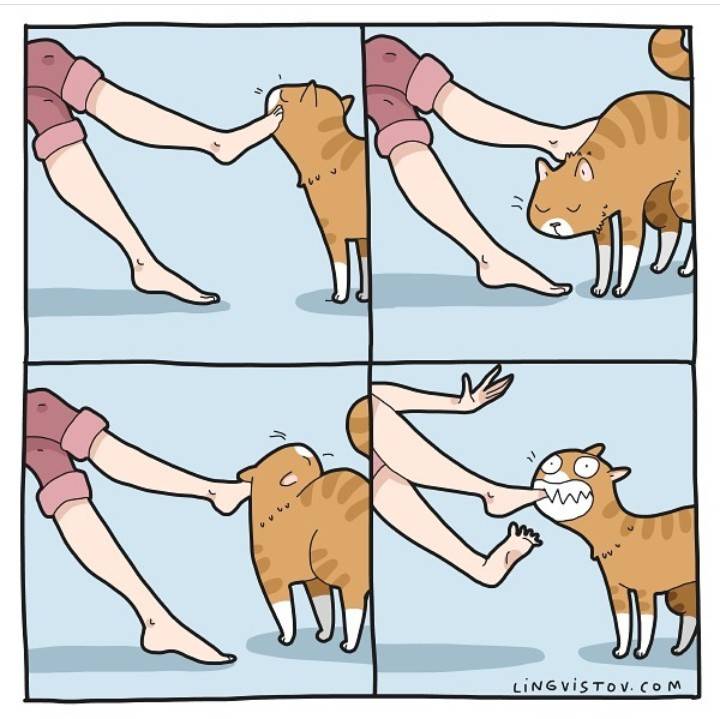
Aprende-se muito com gatos,
Image
especialmente acerca de comportamento humano :-D

Primavera #110

Frias manhãs de primavera
Cold spring mornings

04 março, 2020

Primavera #109

New beginnings
Recomeços

03 março, 2020

Espantos #602

These two live on the back door of the library

02 março, 2020

Palavras lidas #452

LXXXI.

Or I shall live your epitaph to make,
Or you survive when I in earth am rotten;
From hence your memory death cannot take,
Although in me each part will be forgotten.
Your name from hence immortal life shall have,
Though I, once gone, to all the world must die:
The earth can yield me but a common grave,
When you entombed in men's eyes shall lie.
Your monument shall be my gentle verse,
Which eyes not yet created shall o'er-read,
And tongues to be your being shall rehearse
When all the breathers of this world are dead;
You still shall live--such virtue hath my pen--
Where breath most breathes, even in the mouths of men.


--William Shakespeare

01 março, 2020

Ditto #433

I like poems where you don’t really know whether to laugh or cry when you read them.

--X.J. Kennedy