Só é pena as manhãs nebuladas...
14 julho, 2013
11 julho, 2013
Palavras lidas #222
Capítulo I
Era eu mais jovem e mais influenciável, deu-me o meu pai um conselho no qual, desde então, tenho matutado.
-- Sempre que tiveres vontade de criticar alguém --sentenciou--, lembra-te que nem todas as pessoas deste mundo tiveram as mesmas oportunidades que tu tiveste.
__________
Começa assim o grande (pequeno) livro de F. Scott Fitzgerald.
Storm
Why didst thou promise such a beauteous day,
And make me travel forth without my cloak,
To let base clouds o'ertake me in my way,
Hiding thy bravery in their rotten smoke?
'Tis not enough that through the cloud thou break,
To dry the rain on my storm-beaten face,
For no man well of such a salve can speak
That heals the wound and cures not the disgrace:
Nor can thy shame give physic to my grief;
Though thou repent, yet I have still the loss:
The offender's sorrow lends but weak relief
To him that bears the strong offence's cross.
Ah! but those tears are pearl which thy love sheds,
And they are rich and ransom all ill deeds.
William Shakespeare, Sonnet XXXIV
And make me travel forth without my cloak,
To let base clouds o'ertake me in my way,
Hiding thy bravery in their rotten smoke?
'Tis not enough that through the cloud thou break,
To dry the rain on my storm-beaten face,
For no man well of such a salve can speak
That heals the wound and cures not the disgrace:
Nor can thy shame give physic to my grief;
Though thou repent, yet I have still the loss:
The offender's sorrow lends but weak relief
To him that bears the strong offence's cross.
Ah! but those tears are pearl which thy love sheds,
And they are rich and ransom all ill deeds.
William Shakespeare, Sonnet XXXIV
08 julho, 2013
Palavras lidas #221
Viajar! Perder países!
Ser outro constantemente,
Por a alma não ter raízes
De viver de ver somente!
Não pertencer nem a mim!
Ir em frente, ir a seguir
A ausência de ter um fim,
E a ânsia de o conseguir!
Viajar assim é viagem.
Mas faço-o sem ter de meu
Mais que o sonho da passagem.
O resto é só terra e céu.
Fernando Pessoa, 20 Set. 1933
________________
To travel! To change countries!
To be forever someone else,
With a soul that has no roots,
Living only off what it sees!
To belong not even to me!
To go forward, to follow after
The absence of any goal
And any desire to achieve it!
This is what I call travel.
But there’s nothing in it of me
Besides my dream of the journey.
The rest is just land and sky.
Fernando Pessoa, 20 Sep. 1933
Ser outro constantemente,
Por a alma não ter raízes
De viver de ver somente!
Não pertencer nem a mim!
Ir em frente, ir a seguir
A ausência de ter um fim,
E a ânsia de o conseguir!
Viajar assim é viagem.
Mas faço-o sem ter de meu
Mais que o sonho da passagem.
O resto é só terra e céu.
Fernando Pessoa, 20 Set. 1933
________________
To travel! To change countries!
To be forever someone else,
With a soul that has no roots,
Living only off what it sees!
To belong not even to me!
To go forward, to follow after
The absence of any goal
And any desire to achieve it!
This is what I call travel.
But there’s nothing in it of me
Besides my dream of the journey.
The rest is just land and sky.
Fernando Pessoa, 20 Sep. 1933
Etiquetas:
Palavras lidas,
Poesia-Poetry,
Travel
07 julho, 2013
06 julho, 2013
Verão #4
Lisboa deverá hoje registar temperaturas record (previsão 42C), numa onda de calor bastante selectiva.
Lisbon should register record breaking temperatures today (forecast: 42C, or 108F) in a very selective European heat wave.
04 julho, 2013
Sem título #30
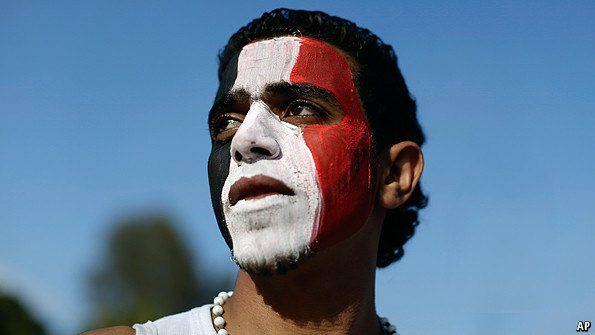
"This week we put Egypt on the cover, without enthusiasm. Some people—including many Egyptians are cheering the ouster of the Islamist president, Muhammad Morsi. We think it a tragedy. It sets a dreadful precedent for the region, in that it encourages discontented people to get rid of their leaders by disrupting their rule, not by voting them out, and it encourages Islamists to distrust democracy. The army can mitigate the situation by holding elections swiftly and cleanly, but much damage has already been done."
John Micklethwait, Editor-in-Chief of The Economist
Etiquetas:
Imprensa-Press,
Sem Título
Ditto #247
Equality may perhaps be a right, but no power on earth can ever turn it into a fact. -- Honore de Balzac
03 julho, 2013
Espantos #364
A leitura de documentos antigos sempre me fascinou. A dificuldade não é a linguagem arcaica, mas antes compreender a forma como se escrevia em cada época. Até determinada altura a escrita era monopólio dos conventos e mosteiros onde os frades escreviam e copiavam documentos todos com o mesmo estilo gráfico. Não é fácil de ler, mas o olho treinado consegue. A partir dos séculos XIII-XIV a escrita saltou para fora dos muros dos mosteiros passando de frades para escrivães e notários. Nos séculos seguintes, as grafias alteraram-se drasticamente e as abreviaturas multiplicaram-se. O XV e o XVI exibem as piores grafias (o último tem a fama de ser o século do "esparguete") que voltam a convergir por volta dos finais do século XVIII parecendo-se já com a maneira como se escreve hoje em script.
Este curto documento é de 1389:
é difícil ler o que diz, mas felizmente há gente especializada na leitura deste tipo de escrita.
Ora aí está a transliteração em português arcaico: trata-se da ordem do rei D. João I para a fundação de uma entidade incumbida de processar e liquidar as contas dos administradores das rendas reais. Era o princípio da contabilidade nacional com a criação dos contos reais.
E como ainda assim, às vezes, é difícil de compreender segue-se a leitura modernizada.
Resumindo e concluindo: se não fizeres como te digo, assumes as perdas!
(clicar nas fotos para ampliar)
02 julho, 2013
Foi neste dia #207 (1932)
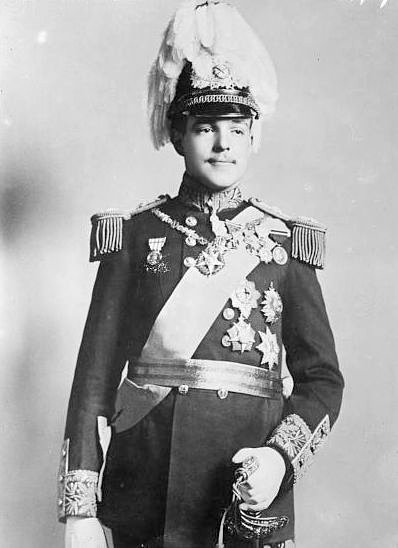
Há 81 anos morria em Londres o rei desventurado que sucedeu ao trono após o assassínio do seu pai e irmão mais velho. Lá permaneceu por dois conturbados anos antes de herdar o título inglório de último rei de Portugal. D. Manuel II tinha 42 anos e não tinha descendencia.
28 junho, 2013
27 junho, 2013
25 junho, 2013
Palavras lidas #220
Tradition is not something a man can learn; not a thread he can pick up when he feels like it; any more than a man can choose his own ancestors. Someone lacking a tradition who would like to have one is like a man unhappily in love.
--LUDWIG WITTGENSTEIN
It is the natural condition of exile, putting down roots in memory.
--SALMAN RUSHDIE
Arriving at each new city, the traveller finds again a past of his that he did not know he had: the foreignness of what you no longer are or no longer possess lies in wait for you in foreign, unpossessed places.
--ITALO CALVINO
To everyone but themselves, it would seem, the Portuguese Jews of seventeenth century Amsterdam were a living contradiction--or alternatively, representing trends of which they were naturally unaware, and which they might not have favoured. Those two perspectives, no doubt, underlie the 'strangeness' experienced by historians of an earlier generation in approaching the Portuguese Jews of the early modern era.
The most blatant contradiction--reiterated more frequently than any other--was summarized most famously in Gebhardt's pithy phrase: 'The Marrano is a Catholic without faith and a Jew without knowledge, but a Jew by will.'
Swetschinski, Daniel M. Reluctant Cosmopolitans: The Portuguese Jews of Seventeenth-Century Amsterdam. London - Portland, OR: The Littman Library of Jewish Civilization, 2000, p. 315.
Foi neste dia #206 (1852)
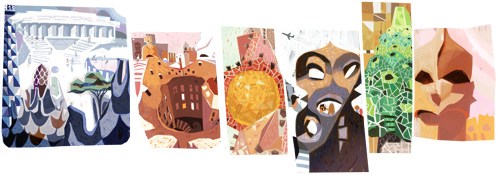
Há 161 anos, nascia em Reus Antoni Gaudí i Cornet, arquitecto do modernismo, que viria a alterar a face de Barcelona.
24 junho, 2013
23 junho, 2013
Espantos #363
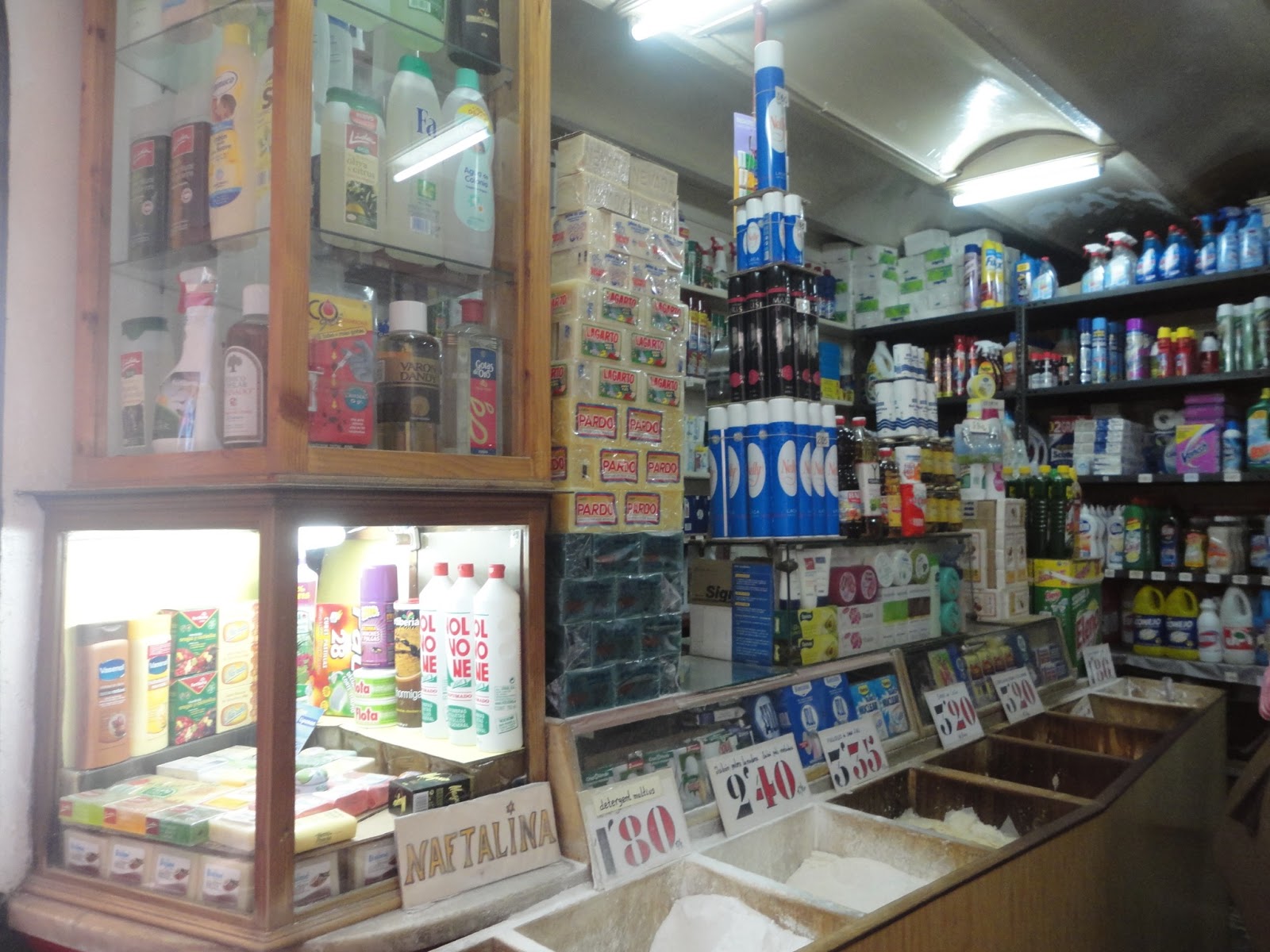
Numa das ruas adjacentes, démos com uma loja à antiga, tipo drogaria.
Vendiam sabão em pó para vários usos,
mas também em barra.
Também vendiam óleo e em tempos que já lá vão os clientes deviam trazer a sua própria garrafa.
Até a máquina registadora era de manivela!
É o tipo de loja em que a cliente descreve determinada nódoa de determinado tipo e pergunta ao droguista a solução. Quando este explica as diferentes alternativas, a cliente decide-se por uma delas, pouco convencida. Para se assegurar pergunta "y realmente funciona?" Responde o droguista: "Senhora, lo vendo por más de 65 años!"
Espantos #362
Cada vez que vou ao mercado da boqueria vejo coisas diferentes. Ontem foi assim:
uma banca do mais variado torrão;
as bancas dos turistas com frutas em pequenas doses...
...para pegar e levar;
uma banca de especiarias, algumas finas;
uma banca de variadissimos cogumelos.
21 junho, 2013
Sem título #29
Do artigo de hoje na Globo acerca dos protestos que se desenrolam há vários dias no Brasil, realço a passagem inicial:
"A Polícia Federal iniciou logo no início da manhã desta sexta-feira (21) uma perícia no Palácio do Itamaraty, em Brasília, que na noite de quinta foi alvo de manifestantes que tentaram invadir o prédio. A ação do grupo deixou vidraças quebradas, pichações e marcas de sujeira."
Com ordem poderá haver progresso, embora não necessariamente; mas sem ordem, definitivamente, não há progresso.
Etiquetas:
Imprensa-Press,
Sem Título
Coisas que não mudam #228
Portugal's best-known export is still porto.
Earlier this month the wine section of the New York Times had an article about the state of the world in the porto wine industry apropos its latest declared vintage of 2011. Totally worth it!
________
________
“Port is the oil of good conversation. It’s what you drink when you’ve had a good meal, when you’re putting the world to right.”
Etiquetas:
Coisas que não mudam,
Imprensa-Press
20 junho, 2013
Coisas que não mudam #227
Há coisas que não mudam, mas que ainda assim surpreendem quando damos conta delas.
No verão os dias são mais longos em Barcelona que em Lisboa, e em Lisboa são mais longos que em Nashville. Faz sentido dado que as latitudes decrescem na mesma ordem. A propósito do solstício de amanhã, dei comigo a pensar que esta será a noite mais curta do ano e amanhã será o dia mais longo e pus-me a comparar as durações do mais longo dia do ano em várias cidades em latitude ascendente:
Honolulu 13h25m54s
Nashville 14h37m24s
Atenas 14h48m08s
Lisboa 14h52m41s
Barcelona 15h10m15s
Paris 14h16m49s
Londres 16h38m20s
Copenhaga 17h32m21s
Helsínquia 18h55m53s
Reiquiavique 21h08m00s*
Entre 7 a 8 horas de sol por dia... é a diferença que faz estar a uma latitude de 21° ou 64°.
Venha o solstício!
________
*Esta última duração tem a curiosidade de durante as 24 horas que compõe o dia, o sol põe-se às 12.03am antes de se levantar às 2.55am... há fusos horários muito mal alinhavados!
________
*Esta última duração tem a curiosidade de durante as 24 horas que compõe o dia, o sol põe-se às 12.03am antes de se levantar às 2.55am... há fusos horários muito mal alinhavados!
19 junho, 2013
18 junho, 2013
Caprichos #254
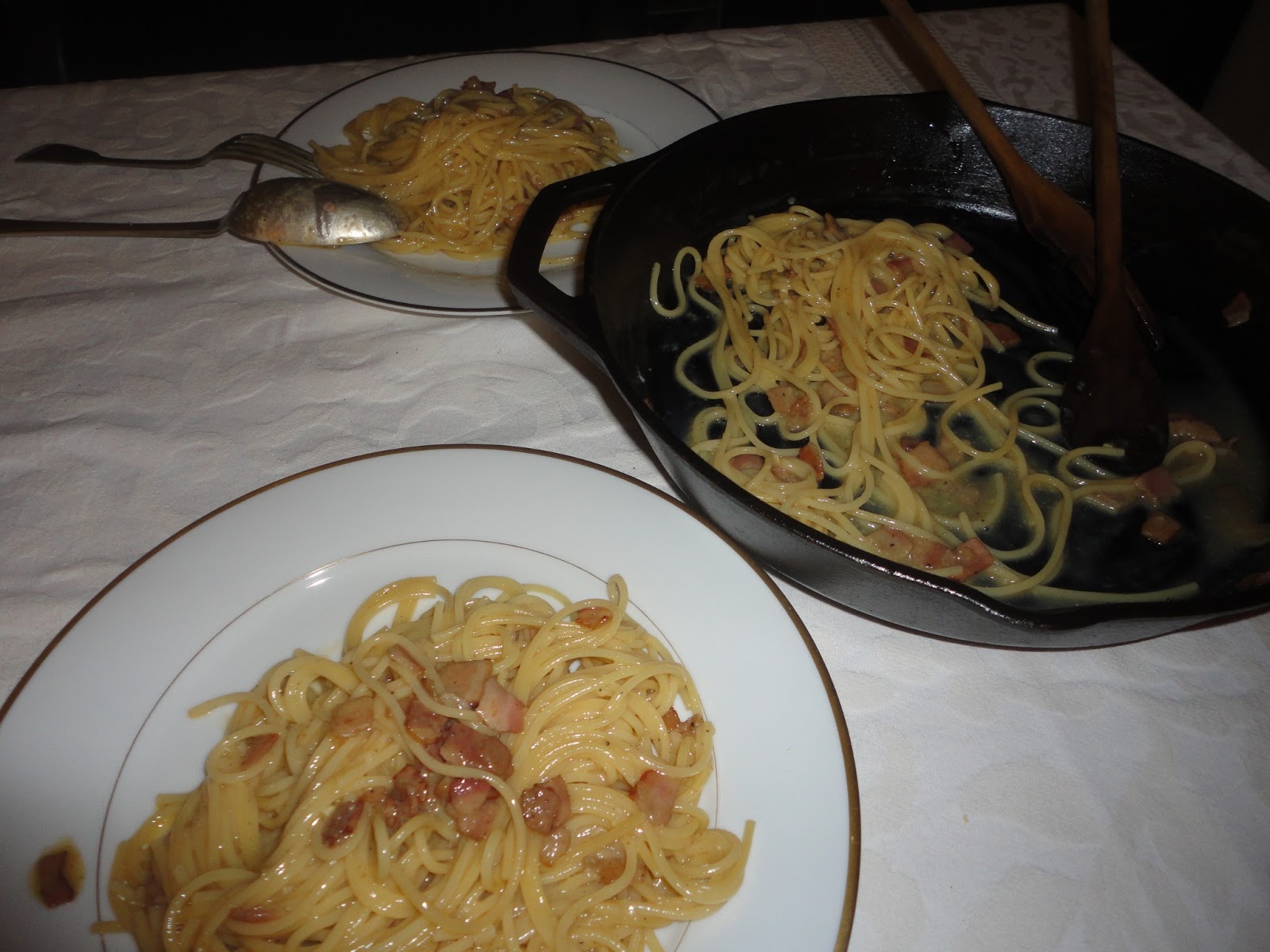
Carbonara em 7 passos:
1) saltear o bacon e colocar a massa a cozer
2) bater três ovos e juntar queijo parmesão a gosto
3) juntar ao bacon um pouco de brandy, mexer e apagar o lume
4) juntar a massa já cozida ao bacon
5) mexer
6) juntar o preparado de ovo e queijo (e pimenta, opcional)
7) mexer. E já está:
Depois só resta comer!
17 junho, 2013
Foi neste dia #205 (1885)
128 years ago today, the statue of liberty arrived in New York Harbor
________
Há 128 anos, a estátua da liberdade chegava ao porto de Nova Iorque
________
Há 128 anos, a estátua da liberdade chegava ao porto de Nova Iorque
16 junho, 2013
15 junho, 2013
14 junho, 2013
Palavras lidas #219
The Diamond and its characteristics
The name "diamond" describes a nonmetallic mineral that has been for centuries the preeminent gem stone. It occurs in nature in various crystal forms, the most common of which is the octahedron shape or some modification of it.
The diamond possesses several exceptional qualities. It is the only precious stone composed of a single chemical element: crystallized carbon. The strongest acids and alkalis do not affect it, but if heated in air to a high temperature of 900°C it burns to carbon dioxide. Its extreme hardness, which exceeds that of any other known substance, is of great industrial importance; the discolored and very impure diamonds that are unsuitable for gems are used as abrasives.
The optical qualities of the diamond--high light dispersion and refraction--combine with the remarkable transparency and translucence to give the cut gem a great brilliancy and display of prismatic colors. The diamond not only shows a great variety of shape and size but also of color. White, yellow and brown specimens are the most common, with the pure white the most prized of all.
Geologic occurrence
A diamond crystal in the state in which it is recovered from the earth is called a rough diamond, or rough. Rough diamonds occur generally in two types of deposits: (1) in igneous rock masses of kimberlite known as pipes; and (2) in alluvial gravel, both inland and marine, into which they were washed from the kimberlite through some volcanic action or underground pressure.
Recovery from kimberlite rock or sea deposits requires large-scale mining processes while that from alluvial-surface fields may be operated on a small scale and worked by individual diggers.
In order to obtain five tons of diamonds, the approximately yearly output, 125 million tons of ore must be processed; this is about 1 carat* of rough for each 20 tons of rock and gravel.** While only 1 ton of the annual output is appropriate for gems, its value is usually twice the of the remainder, which is only suitable fo industrial use.
Szenberg, Michael. The Economics of the Israeli Diamond Industry. New York: Basic Books, 1973, pp. 11-12
___________________
*1 carat = 0.2 grams
**That's a ratio of 1 to 20,000,000. In copper, zink or lead the ratio varies between 1 to 50 and 1 to 100.
13 junho, 2013
Coisas que não mudam #225
Rivalidades
__________
Ontem ao jantar fiquei sentada em frente de um galego. Eu não sabia que ele era galego, e ele não sabia que eu era portuguesa pelo que a conversa fluiu por outros caminhos. Não sei já a que propósito foi, mas a certa altura identifiquei-me como portuguesa e ele curioso perguntou-me de onde. Depois de lhe dizer que tinha nascido e crescido em Lisboa perguntei-lhe de onde ele era.
"De uma localidade muito perto da fronteira com Portugal..." mas havia muito barulho no restaurante e eu só percebi "a Guarda."
"Ora bolas," pensei... "nem a Guarda é muito perdo da fronteira, nem eu me lembro qual é a localidade imediatamente a leste de Vilar Formoso."
Percebi depois que tinha entendido mal quando ele disse que em jovem muitas vezes pegava no barco a remos e atravessava o rio para Portugal, do lado de lá ficava Caminha.
"Galiza," pensei novamente... "a região com os espanhóis mais simpáticos e que nos entendem melhor!"
A partir daí a conversa seguiu por temas como o galego; a semelhança entre português e o espanhol escritos, mas a grande diferença quando falados; e as diferenças ou semelhanças entre espanhóis e entre portugueses. Falei-lhe na rivalidade que existia entre Lisboa e Porto e que o pessoal do norte chama mouros aos lisboetas e restante gente do sul. Ele respondeu que na Galiza é semelhante:
"o pessoal d'a Coruña (uma das cidades mais a norte da região) chama todos nós das terras ao sul de Vigo de portugueses."
Etiquetas:
Coisas que não mudam,
Español
Subscrever:
Mensagens (Atom)