12 maio, 2016

Pedaços de Nova Iorque #3

 the Oculus at the World Trade Center,
the new (and tallest) residential building in NYC,
the Met on a Saturday night,
the Cloisters on a sunny Sunday.

06 maio, 2016

Caprichos #399

Looking forward to explore NYC's food scene over the weekend

05 maio, 2016

Espantos #475

Ora aí está: 3 das 4 equipas nas finais das mais altas competições europeias de futebol de clubes são espanholas: Atlético e Real na Champions, Sevilha e Liverpool na Liga Europa... nada mau! Lembre-se que inicialmente a Champions tinha 32 equipas e a Liga Europa 48.

Foi neste dia #283 (1210)

Há 806 anos nascia em Coimbra Afonso III o bolonhês, por ter casado com Matilde condessa de Bolonha, em 1238. Foi o primeiro rei português a usar o título de Rei do Algarve pois foi no seu reinado que ficou definida a fronteira mais a sul do país.

Afonso III sucedeu no trono a seu irmão Sancho II, o capelo, deposto pelo papa Inocêncio IV na sequência de conflitos internos com a nobreza e com o clero. Sem se fazer rogado, Afonso renunciou ao condado de Bolonha e marchou a Portugal onde encontrou o seu irmão mais velho sem filhos, politicamente isolado e com poucos aliados. Depois de uma breve guerra civil que opôs os dois irmãos, Sancho sai exilado para Toledo em Dezembro de 1247, passando Afonso a regente. Sancho morreu em Toledo a 4 de Janeiro de 1248, data em que começou o reinado de Afonso III.

04 maio, 2016

Espantos #474

No passado mês de Abril a Fugas, d'O Público, fugiu para os Açores. Ficam algumas imagens:

03 maio, 2016

Espantos #473

Notícia do dia: Último preso de Tiananmen será libertado em Outubro, vinte sete anos depois da violenta supressão dos protestos populares pacíficos na República Popular da China. Lembrando Nicolau Maquiavel nascido em Florença neste dia em 1469, "um principe tem sempre razões legítimas para quebrar as suas promessas."
Newspiece of the day: Last known Tiananmen prisoner to be released this year, human rights group says, twenty seven years after the violent suppression of peaceful popular protests in the People's Republic of China. Remembering Nicolò Machiavelli born in Florence on this day in 1469, "a prince never lacks legitimate reasons to break his promise."

Caprichos #398

Another senpai benefit: sweets that resemble trees inside and out!
Privilégio de senpai: doces que parecem árvores, por fora e por dentro!

01 maio, 2016

Coisas que não mudam #351

Dia da Mãe no primeiro domingo de Maio

Ditto #326

People say to me, 'Oh, you're so prolific.' God, it doesn't feel like it — nothing like it. But, you know, you put an ounce in a bucket each day, you get a quart.

--John McPhee

30 abril, 2016

Parece que estou a ouvir #215

When I saw The Ray Legacy this week I was reminded of the power of Ray Charles's music, but also that his was not the first version of Unchain my heart I ever heard. Very impressed by the amount of talent on stage!
____________

Unchain my heart
originally recorded by Ray Charles in 1961, first heard by Joe Cocker in 1987

Unchain my heart, baby let me be
Unchain my heart 'cause you don't care about me
You've got me sewed up like a pillow case
But you let my love go to waste so
Unchain my heart, oh please, please set me free

Unchain my heart, baby let me go
Unchain my heart, 'cause you don't love me no more
Ev'ry time I call you on the phone
Some fella tells me that you're not at home so
Unchain my heart, oh please, please set me free

I'm under your spell like a man in a trance
But I know darn well, that I don't stand a chance so
Unchain my heart, let me go my way
Unchain my heart, you worry me night and day
Why lead me through a life of misery
When you don't care a bag of beans for me
So unchain my heart, oh please, please set me free

I'm under your spell like a man in a trance
But I know darn well, that I don't stand a chance so
Unchain my heart, let me go my way
Unchain my heart, you worry me night and day
Why lead me through a life of misery
When you don't care a bag of beans for me
So unchain my heart, please, please set me free
(please set me free)
Oh won't you set me free
(please set me free)
Woah, set me free
(please set me free)
Woowow, set me free little darlin
(please set me free)
Oh won't you set me free

28 abril, 2016

Palavras lidas #278

The situation in Brazil as seen by The Economist this week. In a common view with Portugal's press (also featuring some mea culpa) no one's safe... rather depressing.
___________

The great betrayal

Dilma Rousseff has let her country down. But so has the entire political class

BRAZIL’S Congress has witnessed some bizarre scenes in its time. In 1963 a senator aimed a gun at his arch-enemy and killed another senator by mistake. In 1998 a crucial government bill failed when a congressman pushed the wrong button on his electronic voting device. But the spectacle in the lower house on April 17th surely counts among the oddest. One by one, 511 deputies filed towards a crowded microphone and, in ten-second bursts broadcast to a rapt nation, voted on the impeachment of the president, Dilma Rousseff. Some were draped in Brazilian flags. One launched a confetti rocket. Many gushed dedications to their home towns, religions, pet causes—and even Brazil’s insurance brokers. The motion to forward charges against Ms Rousseff to the Senate for trial passed by 367 votes to 137, with seven abstentions.


The vote comes at a desperate time. Brazil is struggling with its worst recession since the 1930s. GDP is expected to shrink by 9% from the second quarter of 2014, when the recession started, to the end of this year. Inflation and the unemployment rate are both around 10%.

The failure is not only of Ms Rousseff’s making. The entire political class has let the country down through a mix of negligence and corruption. Brazil’s leaders will not win back the respect of its citizens or overcome the economy’s problems unless there is a thorough clean-up.

Ditching Dilma
Sunday’s vote was not the end of Ms Rousseff, but her departure cannot now be far off. Brazil ought not to mourn her. Incompetence in her first term in office, from 2011 to 2014, has made the country’s economic plight incomparably worse. Her Workers’ Party (PT) is a prime mover behind a gargantuan bribery scheme centred on Petrobras, the state-controlled oil company, which channelled money from contractors to politicians and parties. Although Ms Rousseff has not been personally implicated in the wrongdoing, she tried to shield her predecessor as president, Luiz Inácio Lula da Silva, from prosecution.

What is alarming is that those who are working for her removal are in many ways worse. If the Senate votes to put her on trial, probably by mid-May, Ms Rousseff will have to step aside for up to 180 days. The vice-president, Michel Temer, who comes from a different party, will take over and serve out her term if the Senate removes her from office (see article). Mr Temer may provide short-term economic relief. Unlike the hapless Ms Rousseff, he knows how to get things done in Brasília and his Party of the Brazilian Democratic Movement (PMDB) is friendlier to business than the PT.

But the PMDB is hopelessly compromised, too. One of its leaders is the speaker of the lower house, Eduardo Cunha, who presided over Sunday’s six-hour impeachment spectacle and has himself been charged by the supreme court with taking bribes through the Petrobras scheme. In announcing their “no” votes, some of Ms Rousseff’s allies denounced Mr Cunha as a “gangster” and a “thief”.

The taint of corruption is spread across many Brazilian parties. Of the 21 deputies under investigation in the Petrobras affair, 16 voted for Ms Rousseff’s impeachment. About 60% of congressmen face accusations of criminal wrongdoing.

There are no quick ways of putting this right. The roots of Brazil’s political dysfunction go back to the slave-based economy of the 19th century, to dictatorship in the 20th and to a flawed electoral system that both makes campaigns ruinously expensive and also shields politicians from account.

In the short run, impeachment will not fix this. The charge that is the basis for trying Ms Rousseff—that she manipulated accounts last year to make the fiscal deficit look smaller than it was—is so minor that just a handful of congressmen bothered to mention it in their ten-second tirades. If Ms Rousseff is ousted on a technicality, Mr Temer will struggle to be seen as a legitimate president by the large minority of Brazilians who still back Ms Rousseff.

The fact that the Petrobras scandal has ensnared some of the country’s most powerful politicians and businessmen is a sign that some institutions, especially those that enforce the law, are maturing. One reason politicians are in such trouble is that a new, better-educated and more assertive middle class refused to put up with their impunity. Some of the statutes now being used to put away miscreants were enacted by Ms Rousseff’s government. In any other country, such a cocktail of economic decline and political conflict might be combustible. Yet Brazil has remarkable reserves of tolerance. Divided as they are over the rights and wrongs of impeachment, Brazilians have kept their anger in check. The past three decades suggest that theirs is a country which can endure a crisis without resorting to coups or collapses. And here, perhaps, is a shred of hope.

One way of capturing this spirit would be for the country to hold fresh elections. A new president might have a mandate to embark on reforms that have eluded governments for decades. Voters also deserve a chance to rid themselves of the entire corruption-infested Congress. Only new leaders and new legislators can undertake the fundamental reforms that Brazil needs, in particular an overhaul of the corruption-prone political system and of uncontrolled public spending, which pushes up debt and hobbles growth.

Second best
True enough, the path to renewal through the ballot box is strewn with obstacles. Given its record, Congress is unlikely to pass the constitutional amendment required to dissolve itself and hold an early general election. The electoral tribunal could order a new presidential ballot, on the ground that Petrobras bribe money helped finance the re-election of Ms Rousseff and Mr Temer in 2014. But that is far from certain.

There is thus a good chance that Brazil will be condemned to muddle on under the current generation of discredited leaders. Its voters should not forget this moment. Because, in the end, they will have a chance to go to the polls—and they should use it to vote for something better.

27 abril, 2016

Palavras lidas #277

The Chernobyl tragedy happened thirty years ago yesterday, yet its legacy lives on. The Economist's article highlights the role of the disaster on the collapse of the Soviet Union in 1991. In a few words:

Chernobyl is also a monument to the extinction of Soviet civilisation. As Mikhail Gorbachev, the last Soviet leader, reflected years later, the meltdown, “even more than my launch of perestroika, was perhaps the real cause of the collapse of the Soviet Union five years later.” It was a catalyst for glasnost, the opening-up of the Soviet media, which exposed the flaws of the Soviet system and set off the chain reaction that led to its ultimate destruction.

26 abril, 2016

Coisas que não mudam #350

Syrian child in the Island of Lesbos after disembarking from a boat coming from Turkey
Criança síria na Ilha de Lesbos depois de desembarcar de um barco vindo da Turquia

Yesterday, Members of Parliament in the UK voted down an amendment to the Immigration Bill that would allow 3,000 refugee children stranded in Europe to enter the country. Lord Alf Dubs, the proponent of the amendment, benefitted himself from Kindertransport the government-sponsored effort to rescue Jewish children in Nazi Germany to the UK between 1938 and 1940.

On February 1939, Senator Robert Wagner of New York and Representative Edith Rogers of Massachusetts introduced a bill to allow the entry of 20,000 refugee children, ages 14 and under, from the Greater German Reich into the United States over the course of two years. The bill was never voted upon because it did not receive support in the Senate and died in the summer of 1939.

Shame.
___________

Ontem, o parlamento britânico chumbou uma emenda à lei da imigração que permitiria a entrada no país de 3,000 crianças refugiadas, que já se encontram em campos refugiados da Europa. O proponente da referida emenda, Lord Alf Dubs, beneficiou do chamado Kindertransport que permitiu a entrada no Reino Unido de crianças de origem judaica provenientes da Alemanha Nazi entre 1938 e 1940.

Em Fevereiro de 1939, o senador Robert Wagner de Nova Iorque e a representante do Massachusetts Edith Rogers, submeteram uma proposta de lei que permitiria durante dois anos a entrada nos Estados Unidos de 20,000 crianças refugiadas (menores de 14 anos) oriundas do Terceiro Reich. A proposta de lei nunca chegou a ser votada porque não recebeu apoio no Senado e foi retirada no verão de 1939.

Vergonha.

Children aboard the MS St. Louis (which was denied entry in Cuba, the US, and Canada) in May of 1939
Crianças a bordo do MS St Louis (cuja entrada foi recusada em Cuba, EUA, e Canadá) em Maio de 1939

Palavras lidas #276

Dois poemas de Mário de Sá Carneiro no dia em que passam 100 anos da sua morte, em Paris.
_________
A minha vida sentou-se
E não há quem a levante,
Que desde o Poente ao Levante
A minha vida fartou-se.

E ei-la, a mona, lá está,
Estendida, a perna traçada,
No infindável sofá
Da minha Alma estofada.

Pois é assim: a minha Alma
Outrora a sonhar de Rússias,
Espapaçou-se de calma,
E hoje sonha só pelúcias.

Vai ao Café, pede um bock,
Lê o "Matin" de castigo,
E não há nenhum remoque
Que a regresse ao Oiro antigo!

Dentro de mim é um fardo
Que não pesa, mas que maça:
O zumbido dum moscardo,
Ou comichão que não passa.

Folhetim da "Capital"
Pelo nosso Júlio Dantas ---
Ou uma coisa entre tantas
Duma antipatia igual...

O raio já bebe vinho,
Coisa que nunca fazia,
E fuma o seu cigarrinho
Em plena burocracia!...

Qualquer dia, pela certa,
Quando eu mal me precate,
É capaz dum disparate,
Se encontra uma porta aberta...

Isto assim não pode ser...
Mas como achar um remédio?
--- Pra acabar este intermédio
Lembrei-me de endoidecer:

O que era fácil --- partindo
Os móveis do meu hotel,
Ou para a rua saindo
De barrete de papel

A gritar "Viva a Alemanha!"...
Mas a minha Alma, em verdade,
Não merece tal façanha,
Tal prova de lealdade...

Vou deixá-la --- decidido ---
No lavabo dum café,
Como um anel esquecido.
É um fim mais raffiné.

Paris, Setembro 1915
___________

Fim
Quando eu morrer batam em latas,
Rompam aos saltos e aos pinotes,
Façam estalar no ar chicotes,
Chamem palhaços e acrobatas!

Que o meu caixão vá sobre um burro
Ajaezado à andaluza...
A um morto nada se recusa,
Eu quero por força ir de burro.

Paris, 1916

25 abril, 2016

Palavras lidas #275

There is a Sea

There is a sea,
A far and distant sea
Beyond the largest line,
Where all my ships that went astray,
Where all my dreams of yesterday
Are mine.

Sophia de Mello Breyner Andersen from A Praia in Contos Exemplares (1962)

23 abril, 2016

Coisas que não mudam #349

A nationalist Sant Jordi

Espantos #472

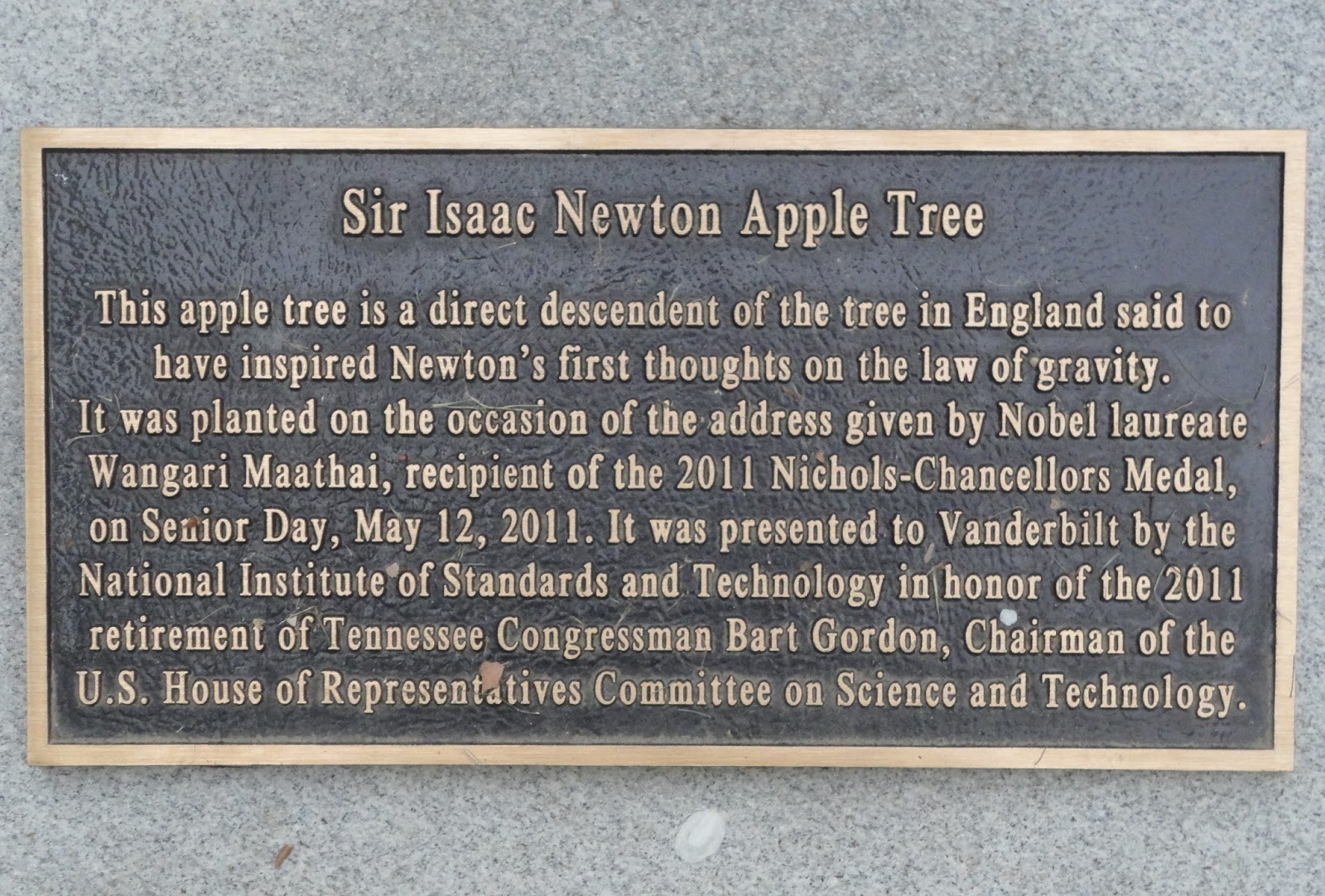
Found on campus this past week
a tree directly descending from the one in England below which Isaac Newton once rested and became insightful... how appropriate for a college campus!

22 abril, 2016

Pormenores #131

The Commander commanding troops at the commander

20 abril, 2016

Retirado do contexto #216

At the reception immediately following the sponsored lecture by the renowned professor, one of the attendees remarked to another as he was served a glass of wine: "well... that was not as pleasant as a glass of wine, but it was better than a root canal."

19 abril, 2016

Espantos #471

A Igreja celebra hoje o Santo Expedito, patrono das causas urgentes e justas. O santo é representado em traje de centurião romano de capacete por terra, com a palma (dos mártires) na mão, esmagando um corvo e empunhando uma cruz onde se lê hodie em latim, que quer dizer hoje. Conta a lenda que este legionário romano natural da Arménia se terá convertido ao cristianismo num dia em que o demónio em figura de corvo o tentava para que se convertesse no dia seguinte (amanhã, ou cras em latim) ao que terá respondido veementemente hoje! Terá depois sido martirizado no ano 303, na actual Turquia, por se ter recusado a adorar os deuses pagãos.